If you’re a local service business — home services, contractors, restaurants, anyone with a service radius — getting found on Google isn’t about luck. It’s not about “SEO magic” either.
It comes down to three things working together:
- Google Local Service Ads (LSA)
- An optimized Google Business Profile (GBP)
- Recent reviews
Miss any one of these, and you’re invisible to the customers who are searching for you right now. Here’s how each one works, and what’s changing fast because of AI.
The Google Search Page Isn’t What You Think It Is
Search “best landscaping company near me” and here’s what you’ll actually see, top to bottom:
- Sponsored results (the most valuable real estate on the page)
- The Google 3-Pack (Maps + three organic-looking listings)
- More sponsored results
- Organic search results — usually dominated by Yelp, Angie’s List, and a handful of local sites
- People Also Ask
- Then, finally, the rest of the organic rankings
If you’re only showing up in that last bucket, you’re not in the sponsored spots and you’re not in the map pack. You’re kind of invisible.

- Click to expand

Pillar 1: Local Service Ads
LSAs (Google Local Service Ads) are some of the most affordable, effective ads a local business can run — and they land you in that premium sponsored real estate at the very top of the page.
Here’s what makes them powerful: not every business qualifies. Google requires proof of proper licensing, permits, and insurance before you’re allowed to run them. That vetting process is exactly why customers trust these results — if you’re showing up in an LSA slot, Google has already verified you’re a legitimate business.
LSAs are very, very closely tied to your Google Business Profile, so if you don’t have one set up correctly or optimized, your LSA ads may not be as effective as they should be.
Pillar 2: An Optimized Google Business Profile
Your Google Business Profile is essentially a mini-website that lives only on Google — and it’s what determines whether you show up in the Maps 3-Pack.
It’s free to set up, but there’s a real difference between a profile that’s just “there” and one that’s actively optimized: complete categories, accurate service areas, photos, posts, and information structured the way Google (and increasingly, AI) expects to read it.
This is also the foundation everything else builds on — your LSAs, your Maps ranking, and your reviews all tie back to this profile.
Pillar 3: Recent Reviews (This Is the One That’s Changing Fastest)
Here’s where things are shifting fast. Google is moving toward AI Overviews and AI Mode, and the ranking logic in AI search looks completely different from a normal Google search.
Run a search in Google AI Mode and you’ll notice:
- Sponsored ads are gone
- National directories like Yelp disappear
- You get real, local companies.
And the factor driving who shows up first? Recency of reviews — not total review count.
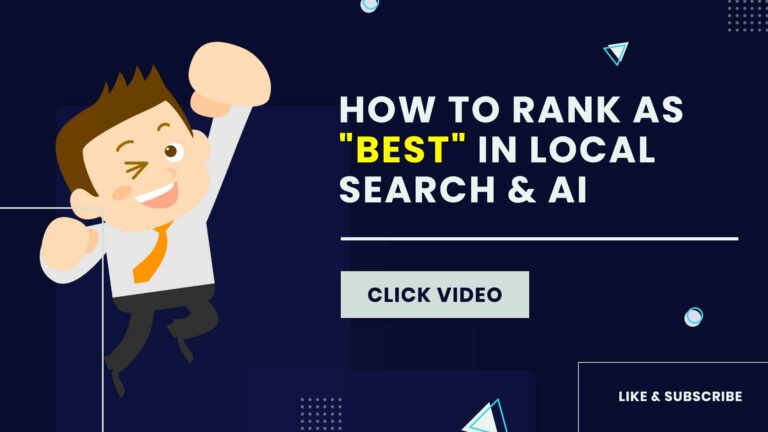
We tested this directly and in real-time in the video above.
One landscaping company had 200+ reviews, but the most recent one was from two years ago. A competitor with a fraction of the reviews — but several from the last few months — outranked them in AI search results every time.
We even found a company with a lower star rating still outranking a higher-rated competitor, simply because their reviews were more recent.
You used to be able to game local rankings with blog posts and backlinks — “best landscaping company in [city]” articles spread around the web. That doesn’t work anymore.
AI search is pulling in real, current signals about your business, and stale reviews are a red flag it can see clearly.
What To Do About It
The fix here isn’t complicated, it just requires consistency:
- Make leaving a review easy. A QR code on invoices, business cards, or a direct link people can tap is the difference between someone actually leaving a review and someone meaning to and never getting around to it.
- Automate review requests. If you’re using a CRM (we build ours Growth Platform on GoHighLevel), you can trigger an automatic review request via email or text the moment a job or project closes out.
- Make it a habit, not a one-time push. Rankings in AI search fluctuate based on recency, so this needs to be ongoing — not something you do once and forget.
FAQs
What are Google Local Service Ads (LSA)? Local Service Ads are a Google ad format that appears at the very top of search results, above traditional sponsored ads. To qualify, businesses must pass a Google verification process that checks licensing, insurance, and background checks — which is why customers tend to trust these listings more than standard ads.
Does every business qualify for Local Service Ads? No. LSAs are only available for specific industries, and Google requires proof of proper licensing, permits, and insurance before approving a business to run them.
What’s the difference between a Google Business Profile and a website? A Google Business Profile is a free listing that lives directly on Google and Google Maps — it’s what drives your visibility in the Maps 3-Pack. A website is a separate asset you own and control. You need both working together for full visibility.
How many reviews do I need to rank well? It’s not about total volume anymore. Google’s AI search results favor businesses with recent reviews over businesses with a large number of older reviews. A business with 20 reviews from the last few months can outrank a competitor with 200 reviews if those reviews are outdated.
How is AI search different from regular Google search? Regular Google search shows sponsored ads, the Maps 3-Pack, and organic listings often dominated by directories like Yelp. AI search (Google’s AI Mode and AI Overviews) strips out sponsored ads and national directories, pulling in local businesses ranked primarily by recent, current review activity.
How often should I be requesting reviews? Continuously. Since AI search rankings shift based on review recency, review requests should be an ongoing part of your process — ideally automated to trigger after every completed job or project.
The Bottom Line
- A good website.
- An optimized Google Business Profile.
- Local Service Ads.
- A steady stream of recent reviews.
Put those four together and you’re covering both the paid and organic sides of the page — which means more visibility, more leads, and a business that’s harder for competitors to out-rank.
Want to know exactly where you stand right now?
Get a free Online Visibility Audit and see how your business actually shows up across Google, Maps, and AI search.
Learn more about our Local SEO services.