
How to Rank for Near Me Searches
If you want to rank for near me searches, you must align your Google Business Profile, your website, your reviews, and your authority signals into one coordinated local SEO system. Businesses that treat these elements separately struggle. Businesses that integrate them dominate local results.
Most companies think adding “near me” to their website is the answer. It is not. Google already understands proximity. What it cares about is relevance, distance, and prominence — reinforced by clear entity signals and structured data that AI systems can interpret confidently.
Everything below supports that strategy.
Why “Near Me” Searches Matter
Search behavior has compressed.
Users type:
- “plumber near me”
- “roof repair near me”
- “best chiropractor near me”
Even when someone searches only “plumber,” Google assumes local intent.
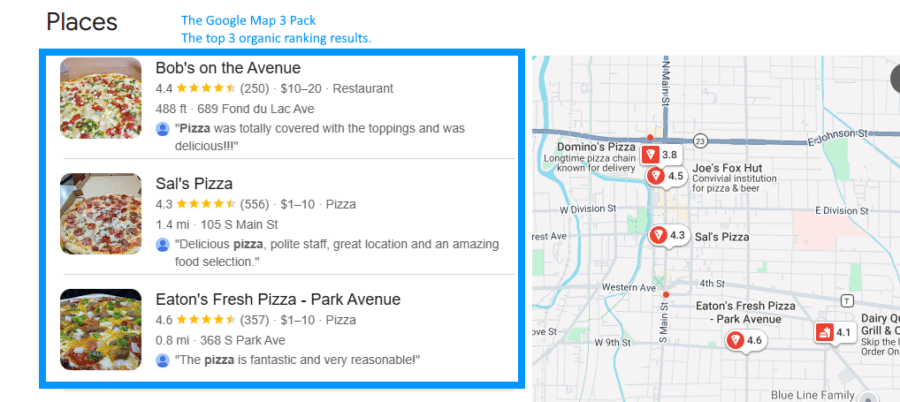
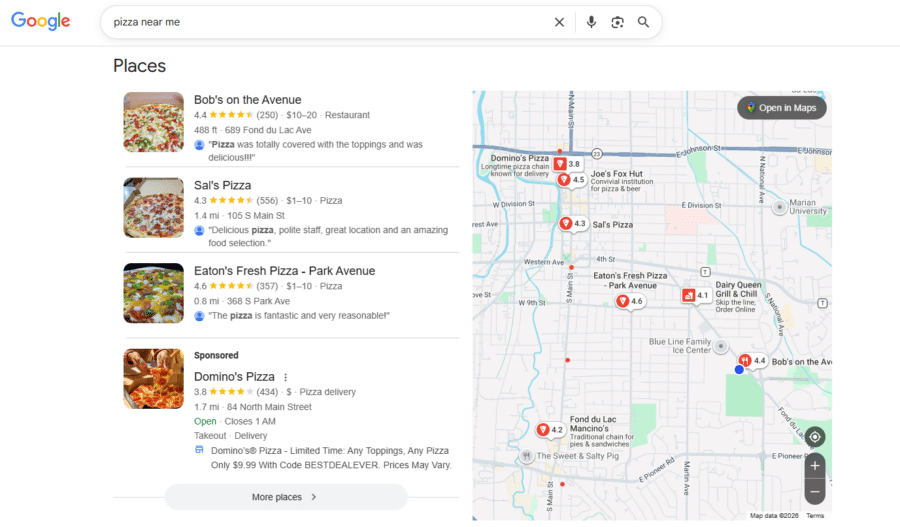
The local map pack now controls the majority of clicks. If you are not visible there, you are invisible.
This is where modern local SEO begins.
How Google Ranks Businesses for Near Me Searches
Google evaluates three primary local search ranking factors:
| Factor | What It Means | What You Control |
|---|---|---|
| Relevance | How well your business matches the search | Categories, services, on-page content |
| Distance | How close you are to the searcher | Verified address + service area clarity |
| Prominence | How trusted and authoritative you appear | Reviews, backlinks, brand mentions |
AI Search optimization now layers on top of these signals. Google analyzes patterns across your website, your reviews, your citations, and your content structure. It looks for consistency. It looks for authority. It looks for clarity.
If your signals conflict, rankings drop.
Step 1: Build a Strong Google Business Profile
Your Google Business Profile is the engine behind near me visibility.
Focus on:
- Correct primary category
- Complete services list
- Real photos from real jobs
- Weekly updates
- Consistent review acquisition
- Clear, keyword-aligned description
An optimized profile tells Google exactly who you serve and what you do. An incomplete profile leaves room for competitors.
This is foundational local SEO.
Step 2: Reinforce Location Authority on Your Website
Your website must confirm what your profile claims.
That means:
- Service + city pages
- Structured Local Business schema
- Consistent Name, Address, Phone
- Clear service descriptions
- Fast load speed and mobile usability
If your site is vague, Google hesitates.
If your site is structured and specific, Google gains confidence.
AI Search optimization favors clarity. Write plainly. Define services directly. Avoid fluff.
Step 3: Generate Reviews Consistently
Review velocity matters more than total count.
Ten reviews in one month signals momentum. Ten reviews over five years signals stagnation.
Google evaluates:
- Recency
- Frequency
- Sentiment
- Owner responses
- Keyword context inside reviews
Encourage customers to describe what you did. Do not script reviews. Authentic language builds trust signals.
Reviews influence prominence. Prominence influences ranking.
Step 4: Strengthen Local Authority Signals
Prominence separates average businesses from dominant ones.
High-impact signals include:
- Local news mentions
- Chamber memberships
- Community sponsorships
- Relevant local backlinks
- Consistent citations across trusted directories
Mass directory submissions do not move rankings anymore. Authority does.
One strong local backlink can outweigh dozens of low-quality listings.
Step 5: Optimize for AI Search Systems
Search engines now summarize businesses before users click.
AI systems evaluate:
- Structured headings
- FAQ clarity
- Schema markup
- Consistent brand messaging
- Service specificity
If your content is vague, AI does not trust it.
If your content is structured and specific, AI reinforces it.
AI Search optimization is not about chasing algorithms. It is about reducing ambiguity.
What Does Not Work Anymore
| Outdated Tactic | Why It Fails |
|---|---|
| Stuffing “near me” everywhere | Google understands proximity |
| Buying reviews | AI detects unnatural patterns |
| Thin city pages | No authority depth |
| Ignoring your website | Profile + site must align |
| Inconsistent business info | Damages trust signals |
Near me rankings reward clarity, authority, and consistency.
The Competitive Reality
Businesses that rank consistently for near me searches usually:
- Appear in the Map Pack
- Rank organically below it
- Run targeted Google Ads for high-intent queries
That layered visibility builds dominance.
Local SEO is not a trick. It is a system.